
The Navy’s Rules and Their Limits
The Caine Mutiny Court-MartialThe novel examines how regulation can preserve coordination yet become harmful when authority treats procedure as a substitute for judgment.
increasing Bearing strength in each event
 decreasing
Bearing strength in each eventdecreasingA System of Procedure

A System of Procedure
Learning the Rules
Willie encounters a Navy education system that rewards memorization and obedience, sometimes over understanding.
The method prepares many officers for standardized tasks but can discourage independent thought.
A Lasting Irony
The institution’s routines are both comic and necessary in the complex work of a fleet.
Queeg’s Version of the Book
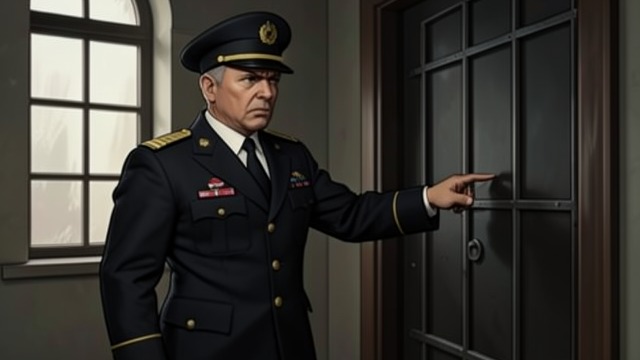
Queeg’s Version of the Book
Procedure as Security
Queeg treats regulations and his own instructions as safeguards against dangerous error.
His personal anxiety, however, turns correct procedure into an inflexible test of loyalty.
The Difference Between Rule and Purpose
The ship’s officers learn that formal compliance does not always serve the immediate task.
A Human Emergency
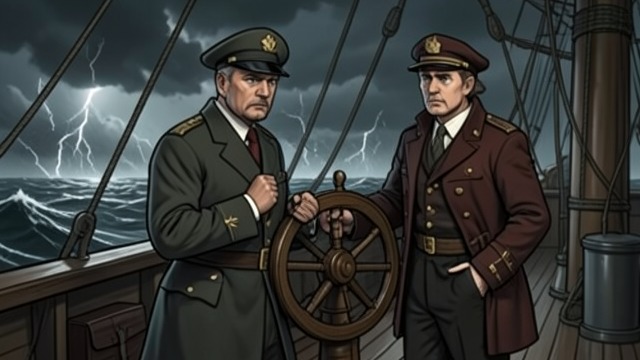
A Human Emergency
The Limits of the Checklist
The Caine faces a situation in which course, ballast, and command must be judged in real time.
Queeg’s preference for fixed orders conflicts with Maryk’s perception of an unfolding threat.
A Difficult Exception
The Navy regulations permit relief only in extraordinary circumstances, while warning that the action itself carries grave responsibility.
The Trial’s Precedent

The Trial’s Precedent
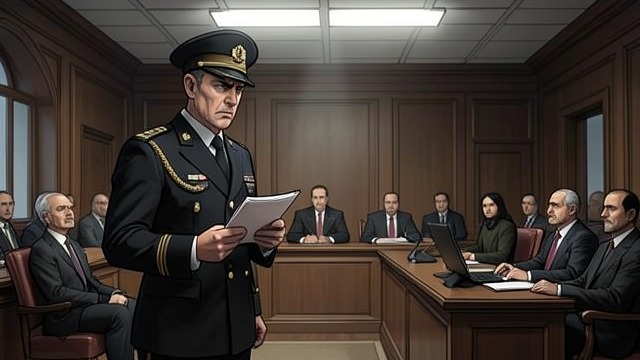
The Prosecution’s Concern
Challee argues that allowing subordinate officers to remove captains would endanger the chain of command.
Greenwald argues that command authority cannot be absolute when the ship’s survival is at stake.
Institutional Risk
The court must weigh one emergency against the dangers of a precedent that could invite personal grievance.
The Reprimand After Victory
The Reprimand After Victory
A Conflicted Outcome
Maryk’s acquittal stands in the trial court, but the Navy’s review disapproves it and reprimands Willie.
The institution emphasizes the danger of unauthorized relief more than the court’s interpretation of the crisis.
No Easy Principle
The novel leaves its central rules problem unresolved: sound judgment may demand action that the system punishes.
At Willie’s midshipmen training
Late 1943, at the start of his command
During the December 1944 typhoon
During Maryk’s court-martial
After Navy review of the acquittal
